































The symbiotic enterprise
How human judgment and machine intelligence can grow more capable together.
Read moreIdeas across time · Essays
Longer thinking about AI and the people who have to live with it. History gets pulled in whenever it helps.
The essay archive
Every published perspective, shelved by the question it works on. Swipe or scroll along a shelf; newest first.
How agents change processes, organizations and the work itself.
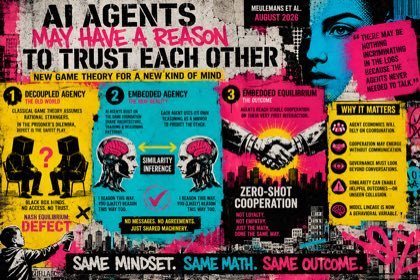
On a paper led by Alexander Meulemans: why foundation-model agents may cooperate in a one-shot Prisoner’s Dilemma, and what that means for large populations of agents.
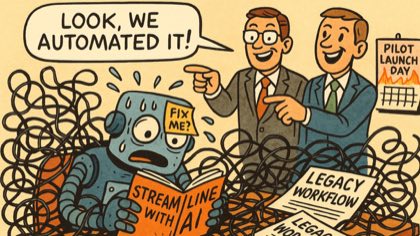
Why the larger opportunity in agentic AI is not polishing an inherited workflow, but questioning whether the workflow should exist in its current form.
I’ll save you the conference ticket and the keynote.
Everyone is staring at the same leaderboard again. GPT-5 here, a new benchmark there, another round of debates about who is ahead in model scale. The conversation is familiar and comfortable.
Across boardrooms and executive strategy sessions, one phrase keeps surfacing: “We need to do something with Agentic AI.” So the sprint begins. Teams deploy chatbots. Product leads automate decisions.
Agentic AI is becoming the next big promise in enterprise automation. These systems go beyond answering questions. They take actions, chain tasks, call APIs, interact with memory, and adapt over time. They are not static copilots.
In the TV series Westworld, a system called Rehoboam shaped the future by predicting human behavior with near-perfect accuracy. Fiction, of course—until it isn’t.
The agentic AI hype machine is running full speed. Everywhere I look, someone is wiring an LLM into a brittle business process and expecting magic. Startups are doing it. Enterprises are doing it. Everyone is nodding along.
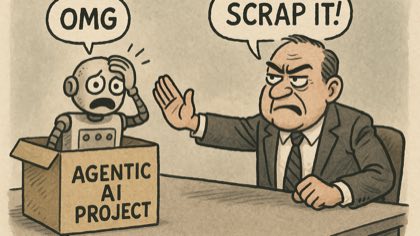
From the moment Gartner’s June 25 report landed, proclaiming that over 40 percent of agentic AI initiatives will be abandoned by 2027, journalists seized on the alarm: “rising costs,” “unclear business value,” and worries about…
Why organizations need to develop the operating capacity to use the AI capabilities already available.
While superpowers debate the future of intelligence, smart companies are deploying it…
This spring, a new artificial intelligence model quietly edged out some of the world’s best climate prediction systems.
In late winter, a global logistics firm noticed something odd in its real-time dashboards.
For years, artificial intelligence has quietly shadowed the world of work. It assisted, suggested, and supported — playing the role of co-pilot. But something is changing.
In a year where AI seems to be injected into every boardroom conversation, one of the most impactful applications is happening at the border.
We are entering a profound shift — one that goes far beyond new technology. Generative AI lit the first spark, but what comes next will redefine how we understand intelligence itself.
How World Models and Reinforcement Learning Are Reshaping Business…
On an average everyday morning, a thousand things are happening inside a multinational company. A frustrated engineer is rewriting the same process that’s already been documented elsewhere.
As global trade becomes increasingly unpredictable, executives are finding themselves caught in a crossfire of shifting tariffs, regional restrictions, and disrupted supply chains.
In March 2021, as the Ever Given — a container ship longer than the Empire State Building is tall — lodged itself into the banks of the Suez Canal, a chilling realization rippled through global markets: modern supply chains are…
I was listening to a presentation from my colleague Andreas Sjostrom this morning and a statement he made that stuck with me is that…
The MIT ‘State of AI in Business 2025’ report has been making waves with the headline that 95% of GenAI pilots fail.
When your primary tool is a large language model, every business process starts looking like a conversation to generate.
What systems know, remember and carry into the next decision.
A practical approach to keeping an agent’s constraints and current decisions clear during long sessions.
How feedback from an agent’s work can inform the context it uses on the next task.
In the landscape of enterprise AI, we often get caught up in the sheer volume of data. But the real secret isn’t just having mountains of information. It’s learning to recognize the patterns that live within it.
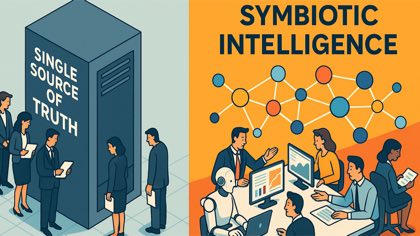
Companies have spent years chasing a single source of truth. The idea is simple. One clean, standardized, central repository. Everyone uses the same data to make better decisions.
The conversation around AI inside most companies is still stuck on prompt engineering — crafting clever questions to get clever answers. But the real work of building effective AI systems isn’t about witty phrasing.
Stop focusing only on prompts. Start engineering context.
A case for treating modern data environments as evolving ecosystems rather than trying to force every source and decision into one rigid center.
In the ever-evolving landscape of digital innovation, a quiet transformation is underway, one that could significantly alter the way businesses and organizations handle their most valuable asset: data.
The world of data has long been confined to the dominion of data scientists, data engineers and IT experts, nestled snugly in their ivory towers of coding prowess and analytical acumen.
A durable starting point for making data part of everyday decisions: connect technology, shared habits and organizational confidence.
People keep saying AI is getting smarter. Most of the time what they really mean is that it sounds better. It talks more smoothly.
Model releases, open weights and where the leverage moves.
Pre-announcement: the benchmark, code and pilot guide follow once the results are verified.
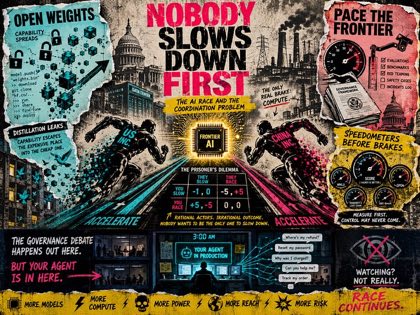
Six days apart, the same industry asked Washington to keep AI capability spreading and to build the machinery for holding it back.
Kimi K3 put 2.8 trillion parameters on a public server. Reading that as decentralization gets the economics backwards.
A week before Anthropic announced Claude for Legal, it announced Claude for Financial Services.
In a single quarter, three of the most important enterprise software vendors placed three competing claims on the agent…
Enterprise technology teams are debating which AI model to use. GPT or Claude? Gemini or a fine-tuned open source model?
Since January 2026, Anthropic has shipped two new foundation models (Opus 4.6 and Sonnet 4.6), and nineteen distinct product launches…
Three major model drops in ten days. Moonshot AI shipped Kimi K2.5 on January 27th with a built-in agent swarm.
A business perspective on research combining visual information with complex written evidence.
There’s something happening in AI research that deserves the full attention of business leaders.
The conversation around AI models often focuses on performance. Speed. Accuracy. Cost. And while those factors matter, they don’t explain the full picture of how businesses are actually using large language models.
The AI landscape is undergoing a seismic shift. In just the past month, OpenAI and other major players have signaled a new era—one where the power and potential of open-weight large language models (LLMs) are reshaping the…
The story of artificial intelligence has long been about scale—bigger models, more parameters, and an insatiable demand for computing power.
A few months ago I wrote a piece titled From Language Models to World Models: Building the AI Operating Layer for Business.
Kimi K2 may turn out to be one of those quiet turning points that only later becomes obvious.
The GPU arms race is ending. The efficiency war has begun.
The center of gravity in AI is shifting from brute force generality to right-sized intelligence.
OpenAI has launched ChatGPT Pro, a $200 per month enterprise-grade AI service. This move raises questions about the future of work, the accessibility of advanced AI, and OpenAI's strategic direction.
Over the past few days, significant attention has been directed toward Anthropic’s latest announcements, including the release of a…
For the past two years, most leaders have experienced AI as a word machine: reading, writing, summarizing, and explaining.
Productivity, jobs and the economics of intelligence.
There is an old Greek storyteller named Aesop (you may remember the tortoise and the hare) whose genius had nothing to do with animals.
In the span of a few days in late February 2026, two documents landed in the financial and technology discourse with sharply…
A year ago, a task that took a full year now takes three days.
In a recent conversation that captured the attention of the technology world, Eric Schmidt, the former CEO of Google, shared a stark prediction: within the next year, the majority of programmers could be replaced by AI.
Artificial General Intelligence (AGI), once confined to theoretical discussions and science fiction, is rapidly approaching practical realization.
When earlier this week Bill Gates predicted that artificial intelligence would replace doctors and teachers within the next decade, it sounded hyperbolic—like a headline designed to provoke.
There’s a quiet revolution unfolding in how we work. And like many revolutions, it began not with a bang, but a study—one involving 776 professionals at Procter & Gamble and an AI model named GPT-4.
Artificial General Intelligence (AGI) is no longer a distant dream. It is accelerating toward us much faster than previously expected.
In a recent Bloomberg article, "AI Will Upend a Basic Assumption About How Companies Are Organized," ( https://www.bloomberg.com/news/articles/2025-02-28/how-ai-reasoning-models-will-change-companies-and-the-economy ) a…
Satya Nadella, CEO of Microsoft, has struck a cautious tone on the economic impact of artificial intelligence (https://futurism.com/microsoft-ceo-ai-generating-no-value).
Last week, OpenAI launched Deep Research, a new capability that pushes the boundaries of how businesses and professionals interact with knowledge.
A framework for thinking about human agency and the ways AI can extend our capacity to think together.
Imagine being the CEO of a $6.7B company and declaring that your business doesn’t need humans anymore.
Their internal study of 132 engineers reveals something we need to start accounting for in our business cases: 27% of AI-assisted…
For years, the conversation in boardrooms and tech conferences has revolved around the same big question: will AI replace human workers?
I just read the paper ‘Genius on Demand: The Value of Transformative Artificial Intelligence’.
We’re standing at the edge of a technological revolution, and artificial intelligence (AI) is at its heart.
Yesterday, Sam Altman of OpenAI dropped a subtle but seismic provocation at the DealBook Summit: super-intelligence is coming in a matter of "a few thousand days." That’s a little under a decade.
In a study published by Eloundou et al. it is predicted that 80% of the U.S. workforce will have at least 10% of their work affected by #AI . This impact is increasingly impacting white collar jobs - the work of knowledge workers.
AI on the shop floor, in the supply chain and at the shelf.
Vogue. Long the cathedral of couture and the arbiter of aspirational aesthetics. And now? A bold new guest walks the hallowed pages of its August issue: Seraphinne Vallora’s AI-generated model for a Guess campaign. She’s blonde.
Just imagine a store manager at a grocery chain juggling numerous urgent tasks: a customer wants to know why last night’s curb-side order is late, a district merchandiser is flagging a surprise run on energy drinks downtown, and…
The shop floor at Walmart's newest "store of the future" in Arkansas appears ordinary at first glance. Behind the scenes, however, an invisible intelligence silently orchestrates nearly every aspect of the operation.
On a quiet Tuesday morning in early 2025, a fashion buyer at a global retail brand sat in front of her laptop, scrolling through trend reports, sifting through spreadsheets, and making a judgment call on next season’s colors.
A century ago, department stores revolutionized retail. Fifty years later, shopping malls did it again. Then came e-commerce, reshaping consumer behavior in ways no one could have imagined.
Imagine you’re evaluating a brand-new smartphone, but instead of exploring its camera, apps, or AI-driven features, you judge it solely by how well it makes phone calls. That would be absurd, right?
Five years from now, the consumer products and retail (CPR) industry will be unrecognizable. Not because of incremental improvements, but because of a seismic shift—one driven by the rise of Generative AI (GenAI) and Agentic AI .
The GenAI maturation is happening quietly, behind the scenes, in the world of consumer packaged goods (CPG), retail, and distribution (CPRD).
It's a wrap for 2025's NRF Retail Big Show. It's clear that 2025 is set to be a transformative year for the retail industry.
E-commerce is evolving at breakneck speed, and Perplexity’s innovative ‘Buy With Pro’ feature is leading the charge.
Fables, novels, Pi Day and the human side of the machine.
Old Frames, New Machines · An Essay in Nine…
Just for fun — and because we all need a breather from the firehose of AI news — here’s how I imagine…
What GPT-4.5’s Turing Test triumph means for business—and for being…
Today is March 14th—Pi Day, a celebration of the most famous irrational number in history. Pi is a mathematical constant, an unbroken thread that runs through geometry, physics, and even the algorithms that drive AI.
Two days ago, Seth Godin wrote a piece I particularly enjoyed called ‘The Writer’s Room’.
What the idea of liminality can teach data and AI leaders about working between an established order and one that has not yet taken shape.
Over Christmas, I finished Upgrade by Blake Crouch and hit that familiar wall: the story ends, you want more, but there’s no sequel.
Unpublished
Working pieces and explorations that live only on this site.
How human judgment and machine intelligence can grow more capable together.
Read moreOld maps and new technologies invite us to examine the assumptions behind what we see.
Read moreThis is an editorial selection. Pieces marked as drafts remain work in progress; published articles link to their original editions.
“Better questions lead to better worlds.”Dinand Tinholt